
Royals
Prince Harry Sued for Defamation by His Former Charity After Public Falling Out

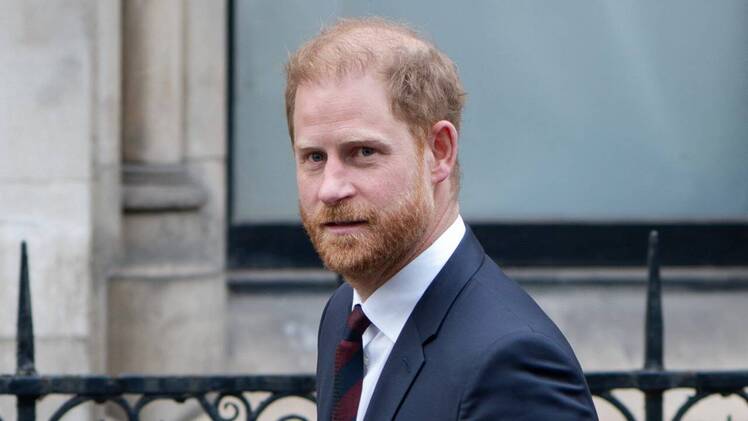
Prince Harry has found himself at the center of more legal drama.
The Duke of Sussex, 41, was sued for libel and slander by Sentebale — a charity he cofounded in 2006 with Prince Seeiso of Lesotho that helps struggling children and adolescents who are living with HIV and/or AIDS — multiple outlets reported on Friday, April 10.
According to court records viewed by the Associated Press, Sentebale filed the lawsuit at the end of last month in London’s High Court. The Spare author’s friend Mark Dyer, a former trustee, is also being sued in a claim listed as “defamation — libel and slander,” per the BBC.
A statement shared on Sentebale’s website stated, “Sentebale has commenced legal proceedings in the High Court of England and Wales. The charity seeks the court’s intervention, protection, and restitution following a coordinated adverse media campaign conducted since 25 March 2025 that has caused operational disruption and reputational harm to the charity, its leadership, and its strategic partners.”
“The proceedings have been brought against Prince Harry and Mark Dyer, identified through evidence as the architects of that adverse media campaign, which has had significant viral impact and triggered an onslaught of cyber-bullying directed at the charity and its leadership,” the statement added.
According to the AP, drama within the charity — regarding a new fundraising strategy — came to light in 2023; the two founders stepped down as patrons in March 2025.

They reportedly said the board’s relationship with its chair, Sophie Chandauka, was beyond repair. Chandauka then accused the royal of orchestrating a campaign of bullying and harassment to force her out.
Page Six reported that Chandauka claimed the duke’s team asked her to defend his wife, Meghan Markle, from negative press coverage connected to a photo op at a 2024 Sentebale event.
“I said no, we’re not setting a precedent by which we become an extension of the Sussex PR machine,” Chandauka told the Financial Times in March 2025, per Page Six.
According to the AP, CEO David Holdsworth said in an August 2025 statement, “Sentebale’s problems played out in the public eye, enabling a damaging dispute to harm the charity’s reputation, risk overshadowing its many achievements, and jeopardizing the charity’s ability to deliver for the very beneficiaries it was created to serve.”
That same month, the Charity Commission said it found “no evidence” of “widespread or systemic bullying or harassment, including misogyny or misogynoir at the charity.”