Celebrity
How Model Christine Handy Rebuilt Her Life And Identity After Cancer Stripped It All Away


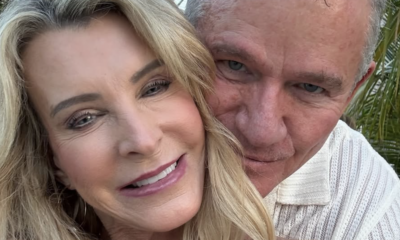
Before she became a voice for women fighting for their lives, Christine Handy was the woman in the perfect dress, smiling from the red carpet or the magazine spread. From the outside, she embodied glamour, but at 41, breast cancer shattered the illusion. It was in that devastation, she says, that she finally came face to face with her true self.
“I was once the woman in the perfect dress at every gala, smiling for cameras while feeling completely empty inside,” Handy says. “Cancer stripped away the hair, the breasts, the illusion of control… and in that raw place, I finally met myself.”
Now 54, Handy is sharing her story not just in words, but on screen. “Hello Beautiful,” a feature film based on her bestselling novel “Walk Beside Me,” premiered this year at the Beverly Hills Film Festival and earned the Golden Palm Award for its deeply human portrayal of resilience. The film, directed by Ziad Hamzeh and shot in Boston, stars Tricia Helfer (“Battlestar Galactica,” “Lucifer”) as Willow Adair, a woman whose fall from grace becomes a journey to authentic self-worth.
“I documented every low because I knew one day another woman would be scrolling on her phone in a hospital bed at 3 a.m., terrified she wouldnt make it to sunrise. I wanted her to find a story that says, Ive been that low, and look — I became more alive on the other side,” Handy says. “Turning my journals into a novel and that novel into a film wasnt about me anymore. It was about leaving a light on in a hallway thats been dark for far too long.”
The films protagonist, Willow, reflects Handys own unraveling and reassembling. Once defined by beauty and approval, shes brought to the edge by a string of medical crises, including a cancer diagnosis. But with the help of the fierce friends she calls her “Angels,” she reclaims a sense of purpose that comes from within.
“I didnt choose cancer — it chose me,” Handy says. “But in the wreckage of chemotherapy, mastectomy, and the long, dark nights when I wasnt sure Id see morning, I made a different choice. I decided my pain had to have purpose.”
That purpose has taken many forms. Today, Handy calls herself a “Hope Facilitator” and spends much of her time speaking to women across the country, helping them reframe hardship as a starting point for transformation. She encourages women to step away from comparisons and competition and instead step into collective strength.
“Women, we’re not rivals in some zero-sum game; we’re allies forging a world where lifting each other up shatters the chains of competition,” she says. “I teach women to stand tall together because true power blooms when we ditch envy and root for one another’s wins — its how we rewrite the rules.”