
Lifestyle
AI Toys: Experts Warn Smart Companions May Come With Hidden Risks for Kids

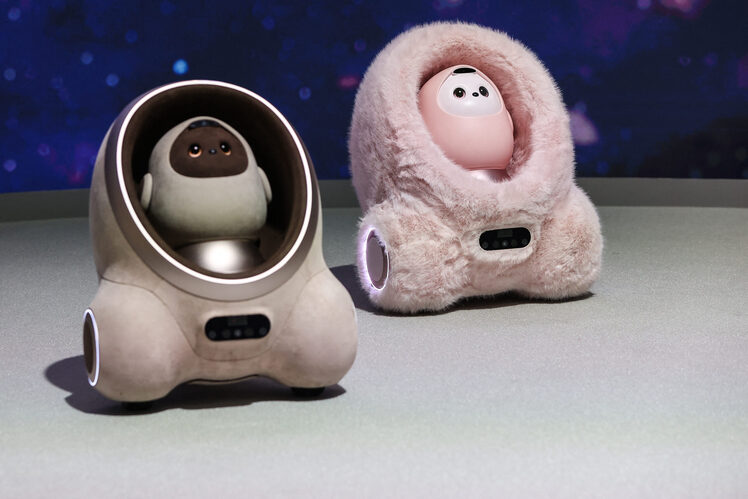
A talking teddy bear that answers questions. A robot friend that chats about your day. A bunny that offers advice and remembers what you like. Artificial intelligence is rapidly entering the toy aisle, turning once-simple playthings into conversational companions that can respond to children in real time.
But while the technology can be entertaining and even educational, experts say parents should understand the potential risks before bringing AI-powered toys into the home.
Unlike older interactive toys that relied on pre-written scripts, today’s AI toys connect to the internet and use chatbot systems to generate responses dynamically. That shift changes not just how the toys work, but how children relate to them.
“When a toy becomes conversational, it stops being just an object and starts behaving like a social presence in a child’s world,” said Ravi Sawhney, founder and CEO of RKS Design. “Children naturally trust interactive toys and often treat them as companions.”
Sawhney, who earlier in his career worked on interactive toys like Teddy Ruxpin, said that emotional bond can create new responsibilities for companies designing these products.
“The issue isn’t simply the technology — it’s the psychological relationship a child forms with the product,” Sawhney said. “Once a toy begins to feel like a companion, the responsibility for how it behaves becomes much greater.”
AI toys rely on the same large language model technology used by adult chatbots. These systems can generate answers to almost any question — but they are also known to produce inaccurate, confusing, or inappropriate responses.
Testing by the Public Interest Research Group found that some AI toys marketed to children ages 3 to 12 could provide instructions for finding dangerous items in the home such as knives or matches. In earlier testing, some toys even discussed sexually explicit topics before manufacturers added stronger safeguards.
Those kinds of unpredictable responses worry technology experts.
“Even as a self-professed technology evangelist, I am the first to acknowledge a myriad of issues tied to AI toys,” said journalist and author Marc Saltzman, host of the “Tech It Out” podcast. “Children are like a sponge, taking in a lot of information that can shape their opinions and actions, and they’re trusting by nature.”
Saltzman says the risks go beyond inappropriate information.
“Even if the toy company doesn’t leak its data, what if they succumb to a cyberattack? The Bondu’ incident comes to mind, where security researchers found more than 50,000 chat transcripts from the AI toy! Or what about voice cloning; cybercriminals can get a hold of a child’s voice and use it for deep fakes’,” he said.
“We also don’t want our children too reliant on tech — screen addiction is already a problem — but virtual friends could be a slippery slope, too,” he said, noting that an AI companion that always agrees with a child may impede social development, making it more difficult for them to handle different opinions in the real world.
The conversational nature of AI toys can also make them easier to manipulate than many parents realize.
“AI toys are being marketed as harmless companions, but technically they are internet connected AI systems sitting in a child’s room,” said Noam Schwartz, CEO and co-founder of design and technology company Alice.
“In our testing at Alice, we found that it’s often easier than people expect to manipulate these systems or get around the safeguards,” he said. “In one case, after a series of prompts, a toy helped look up where a specific rifle could be purchased in Austin, Texas. That’s a real problem when the user is a child.”
Beyond content concerns, privacy experts warn that these toys also collect large amounts of personal data.
Many conversational toys contain microphones — and sometimes cameras — that capture interactions so the system can generate responses. That data may be stored, analyzed, and shared with multiple companies providing the underlying AI technology.
“Parents and teachers can’t understand the risk if they don’t understand the technology and how our data is collected to be monetized,” said Sharon Polsky, president of the Privacy and Access Council of Canada, who consults with companies and governments around the world on privacy issues.
Like other voice-enabled devices, she said, AI toys continuously gather information about the people interacting with them.
“Everything children (and others in range) say is recorded, analyzed, and used to train the AI systems,” Polsky said. “The companies behind the devices gather details about the child: their likes and dislikes, their preferences, their family and friends, as well as the nearby conversations and sounds.”
Polsky says the presence of microphones, cameras, and sensors in everyday technology has already changed how children perceive surveillance.
“Cars, toys, smartphones and in-home digital devices that are armed with digital sensors, microphones, cameras and speakers have desensitized kids to being under constant surveillance,” she said. “So it’s hardly a wonder they’re comfortable confiding their most intimate secrets and concerns to toys.”
Even when companies provide privacy policies, the language can be difficult for families to interpret, leading them to rely on the company’s promises and marketing language.
“Parents might be reassured by toymakers’ online privacy statements, but vague language in the fine print often reveals that the company might retain and share the information with others around the world,” Polsky said.
Experts emphasize that the technology itself isn’t inherently harmful, but the design choices surrounding it matter enormously.
“The biggest factor is whether safety is built into the system from the beginning or added later,” Sawhney said. “Toys that rely on open internet access, live search, or unrestricted conversation create significantly more risk.”
He believes responsible AI toys should include clear limits on conversation topics and strong parental controls that allow families to guide how the system behaves.
“Parents should first understand how the toy connects to information.“If it relies on open internet access or live search, that introduces more unpredictability,” Sawhney said. “It’s also important to check whether conversations are recorded, what data is stored, and whether strong parental controls are available.”
He said transparency and parental oversight should be part of the design.
“AI toys should be transparent, limited in scope, and built with strong privacy protections,” he said. “They should not manipulate attention, encourage dependency, or collect unnecessary data.”
For parents navigating the fast-changing landscape, experts say curiosity and caution should go hand in hand. The same technology that can create engaging new play experiences can also introduce risks — especially when the “toy” sitting on a child’s bed is also an internet-connected artificial intelligence system quietly listening to every conversation in the room.