Lifestyle
What ‘The Floaters’ and Summer Camp Can Teach Every Leader About Courage

“The Floaters” is a summer camp comedy from director Rachel Israel that follows “Nobody Wants This” star Jackie Tohn as a washed-up musician who takes a last-resort job supervising the “outsider” kids at her childhood camp, only to rediscover who she is in the process.
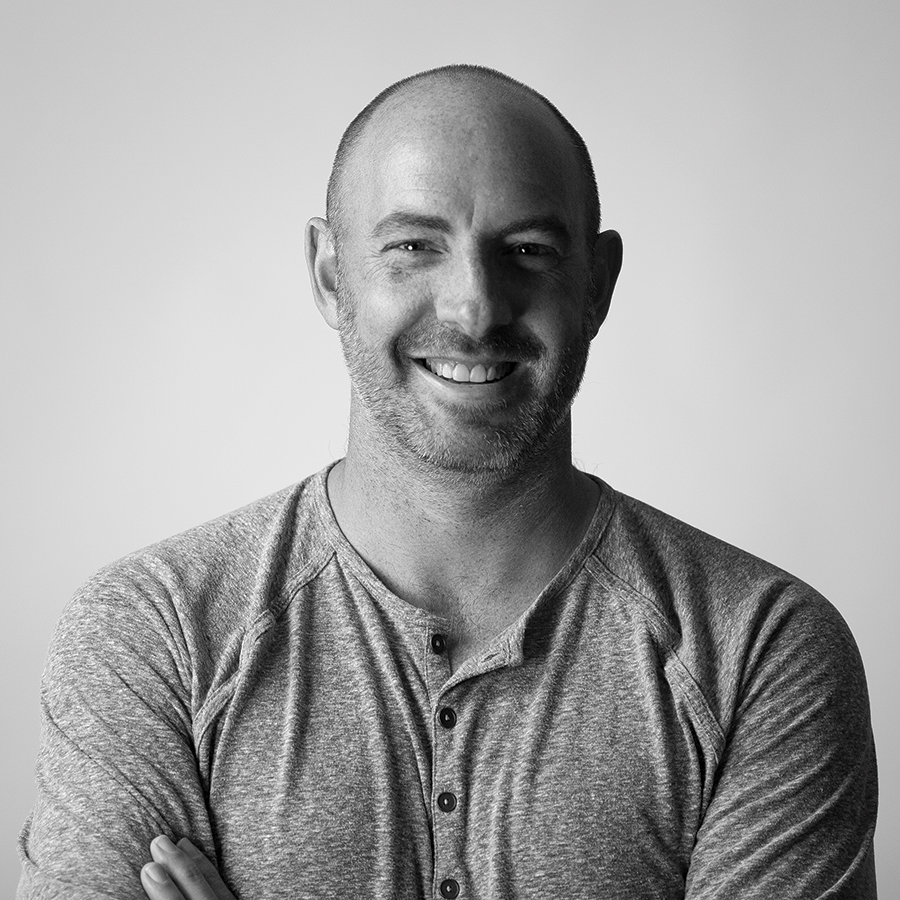
Ryan Berman, founder of Courageous and author of Return on Courage, sees something else entirely: a leadership laboratory.
Long before he was coaching Fortune 500 executives and helping organizations operationalize courage, he was an eight-year-old boarding a plane by himself to spend the summer at YMCA Camp Sea Gull in North Carolina. He kept going back, year after year, eventually becoming the Athletics chief.
“There was never a truer version of myself than the version of me at camp,” he says.
Ask Berman what made camp so different from home, school, or even the soccer field, where he was cut two years in a row before eventually making Varsity, and he doesn’t talk about cabins or campfires.
He talks about competing the right way.
“I love to compete. I’m going to always compete with character,” he says. “There’s almost no version where fear ever won because I could cut it with play, and I could diffuse it for others too.”
As Athletics chief at summer camp, Berman created the counselors’ first-ever World Cup competition, transforming roughly 800 campers into face-painted, color-coded countries competing in a tournament that was equal parts sports, storytelling, and community.
“It wasn’t just fun and games,” he says. “It was a way to bring people together.”
Camp, he says, struck a balance that many workplaces never do.
“There’s freedom, but there’s also structure. You know where you need to be, and you know you’re safe getting there.”
The leadership lessons often came long after the games ended.
Each evening, cabins gathered for a counselor-led discussion. One night it might be a bundle of popsicle sticks showing how easy it is to break one, but how it’s nearly impossible to snap all of them together. It was a reminder that people are stronger collectively than alone.
Another night it was a tube of toothpaste.
“You learn that once you say something to a colleague, once you say something to a client, you can’t take it back,” Berman says.
Today, those same principles show up inside boardrooms instead of with bunkmates.
Through his podcast, books, and company, Berman has spent years studying courageous people, from Navy SEALs and astronauts to CEOs and entrepreneurs. Yet the people who leave the biggest impression aren’t necessarily the ones with the most dramatic stories.
After interviewing hundreds of leaders while researching his book Return on Courage, Berman came away with a realization that changed his career.
“The dictionary definition of courage is the ability to do something that frightens you,” he says. “I don’t think people want to do things that scare them, especially at work. I went in thinking courageous ideas were the only ones that mattered. Then I realized courageous ideas die without courageous leaders.”
Instead, he believes courage begins with something far more practical: creating environments where people feel safe enough to grow.
That’s why he believes organizations spend too much time trying to eliminate fear instead of creating the conditions where people can experiment, contribute, and grow.
“Knowledge. Faith. Action,” he says. “That’s our system.”
For Berman, those aren’t just words. They’re the progression that allows people to move from uncertainty to confidence.
So as another summer camp movie reminds audiences of bug spray, bunk beds, and color wars, Berman sees something much bigger: character, togetherness, and leadership.
His challenge to leaders isn’t to recreate campfires in conference rooms.
It’s to ask a different question:
“Are you creating an environment where people are willing to play?”
Because the leaders people remember aren’t always the loudest or the most fearless. They’re the ones who make it safe for everyone else to become a little more courageous.
“Know it. Feel it. Do it. That’s the framework. Camp just happened to teach it to me first.”